
Contextual signals
Evaluate tone together with what was said
Use acoustic and conversational context to identify possible frustration, urgency, confusion, satisfaction, or high intent.
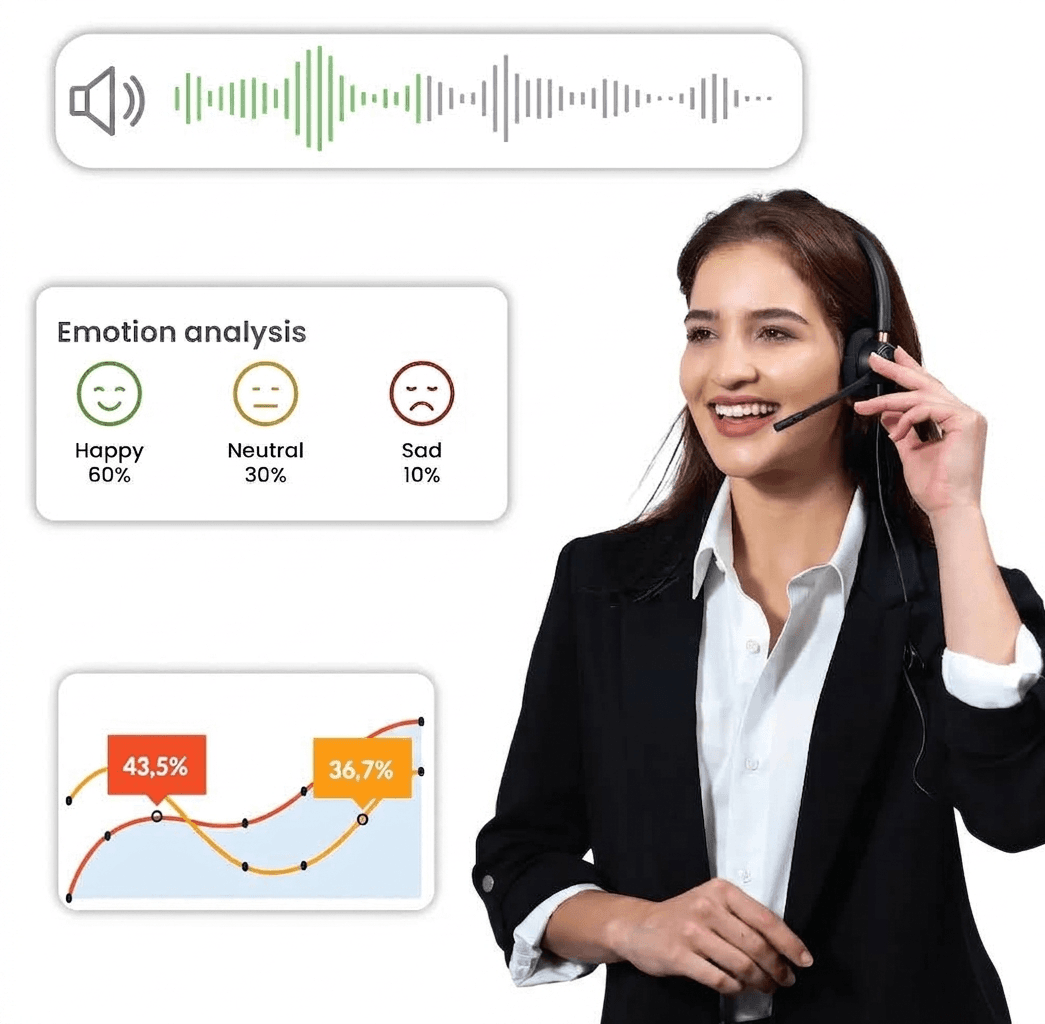
Detect customer emotion and urgency so teams know when a conversation needs care, escalation, or recovery.
Connect sentiment detection to your existing tools
From signal to response
Choose meaningful signals, combine them with context, define safe actions, and compare predictions with human-reviewed conversations.
Define which emotional or urgency patterns matter for the workflow.
Combine signals with intent, phrases, customer status, and call history.
Route, notify, flag, or continue based on the strength and risk.
Sample the underlying calls and tune thresholds with human reviewers.
Inside a sentiment signal
Sentiment is most useful as evidence. Conversation changes, customer context, and calibrated thresholds work together to support the right human response.
Contextual signals
Use acoustic and conversational context to identify possible frustration, urgency, confusion, satisfaction, or high intent.
Timely escalation
Combine sentiment with intent, account context, and business rules before prioritizing a call or inviting a human teammate.
Quality learning
Focus quality review on calls with meaningful changes and compare the underlying evidence to improve prompts, coaching, and service design.
Conversation signal
Send meaningful signals into routing, QA, and support workflows.
Plan your integrationTone, language, and conversation history combine before any alert, escalation, or review workflow begins.
Use cases
Identify calls that may need faster help or a supervisor response.
Earlier interventionPrioritize reviews around frustration, confusion, or major tone changes.
Focused QA effortReview moments where interest rose, objections appeared, or confidence fell.
Better coaching contextSentiment Detection at a glance
Live
Flag
Trend
Signal engine
Tone, language, and conversation history combine before any alert, escalation, or review workflow begins.
Contextual signals
Use acoustic and conversational context to identify possible frustration, urgency, confusion, satisfaction, or high intent.
Signal core
Frequently asked questions
A practical overview of sentiment detection, setup, and how your team stays in control.
No. Sentiment is a probabilistic signal, not a certain reading of a person's internal state. It should support human judgment and workflow rules rather than make high-impact decisions by itself.
It can contribute to an escalation rule, ideally alongside conversation content, intent, customer context, and clear thresholds to reduce unnecessary transfers.
Use representative calls, human-reviewed labels, different languages and call conditions, and error analysis. Review false positives and false negatives for each intended workflow.
Yes. Teams can aggregate configured signals by workflow or period, then inspect the relevant calls to understand what changed and whether the trend is meaningful.
Start with one sentiment detection workflow, connect the tools it needs, and expand from real results.